Begin with decisions, not a copied rotation
A Mage learning plan should answer what to cast, where to stand and when to stop. The exercises below are editorial practice advice. The official October class preview explains the design, but predates launch; check the current spellbook for requirements and tuning.
Choose a manageable enemy and practise with the spells you actually know. The goal is a repeatable, safe fight, not reproducing a video filmed with a different level, talent setup or version of the game.
Know the Forever-specific tools
Blizzard’s preview introduces Comprehension, used through Comprehend Scroll in the General spellbook tab. It also describes Frostfire Bolt as a level-40 spell benefiting from both Fire and Frost interactions. These are reasons to read new tooltips instead of copying a Classic spell list.
When you learn a spell, test it separately before adding it to a sequence. Write down whether it is meant to open a fight, respond to danger, control an enemy or deal damage. You do not need to press every spell in every encounter.
Build a controlled single-target routine
Find open ground and check the space around your intended target. Start at a comfortable distance. Watch the enemy’s approach and decide in advance where you will move if it reaches you.
After the fight, compare remaining health, Mana and available escape space. If you finish low on all three, reduce the difficulty and practise earlier movement. Judge a routine over several ordinary fights rather than one unusually good critical hit.
Use control as a group agreement
Blizzard identifies Polymorph as an important part of the Mage toolkit. Before a group pull, agree which enemy you should control and how the party will recognise it. Make sure the group knows whether you need time to prepare.
Keep damage away from an assigned controlled target unless the group changes the plan. If control fails, say so immediately. A clear warning lets the tank and healer react; silently switching to damage can make an already confused pull worse.
Plan Mana and area damage together
Check your resources before joining the next fight. Tell the party when you need a recovery stop and use safe downtime to organise supplies. Avoid arriving at a difficult encounter with no room for an unexpected extra spell.
Before using area damage, confirm that the enemies are gathered and that it will not disrupt the control plan. Practise on a small, agreed pull first. Bigger numbers are not useful if they create an extra fight or force the healer into a dangerous rescue.
Evaluate a spell school with a small test
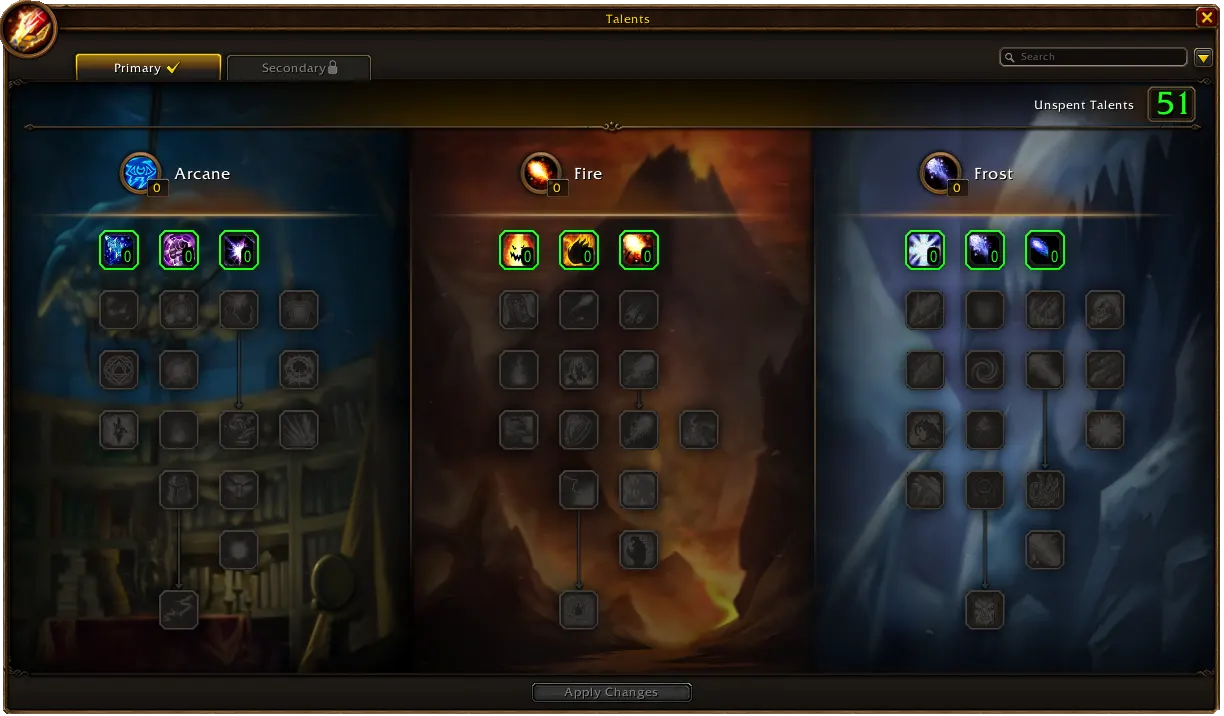
Treat Arcane, Fire and Frost choices as hypotheses to test rather than permanent labels. Read the talents you can currently access, choose a specific improvement you want, and measure whether it solves your problem.
Keep conditions comparable: similar enemies, the same gear and one change at a time. Record recovery time and mistakes as well as damage. Your next-session task is to complete a few safe fights, explain your positioning, and practise one agreed control assignment.